12 Affordable Coastal Towns Where You Can Live Comfortably On Six Hundred Dollars
Affordable Coastal Towns. What if I told you that right now, today, there are real coastal towns where the ocean is your backyard, the cost of living is a fraction of what you’re paying now, and six hundred dollars a month is genuinely enough to live comfortably? Not camping. Not roughing it. Actually living, with a roof over your head, food on your table, and money left over at the end of the month.
Welcome to Hiring Haven. We collect, analyze, and simplify global data to help serious people make smarter lifestyle and relocation decisions. And in this video, we’ve done exactly that. We’ve pulled together research from cost of living databases, expat communities, housing reports, and economic indicators to bring you ten coastal towns where six hundred dollars a month is not a fantasy. It is a real, documented reality for thousands of people already living there.
We’re counting these down from number twelve to number one, and I promise you, by the time we hit number one, your perspective on what’s possible will have completely shifted. Let’s get into it.
Number twelve. Kampot, Cambodia.
Kampot sits quietly along the Kampong Bay River where it meets the Gulf of Thailand, and it might be the most underrated coastal-adjacent town on this entire list. Technically it’s a riverside town with easy beach access to Kep, which is just twenty minutes away by motorbike. But the lifestyle here is undeniably coastal.
A furnished room or small apartment in Kampot runs between one hundred and two hundred dollars per month. Meals at local restaurants average one to two dollars. A full grocery run for the week can come in under fifteen dollars. Your total monthly budget including rent, food, transportation, and occasional entertainment can comfortably sit between four hundred and five hundred and fifty dollars.
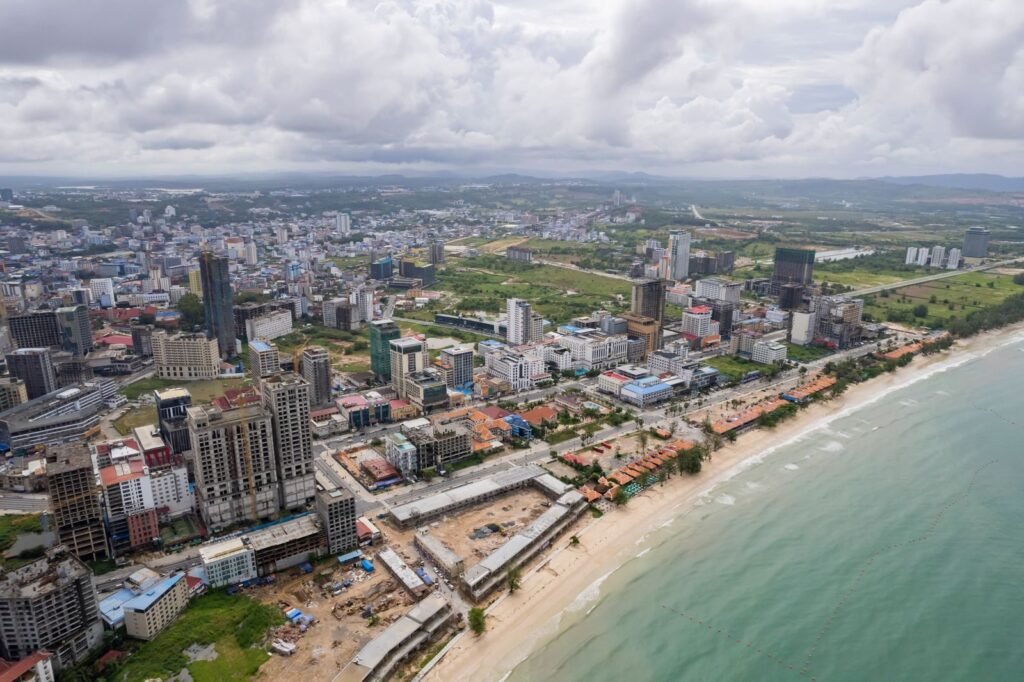
The expat community here is well established, the internet infrastructure has improved significantly, and the pace of life is genuinely slow and deliberate. For people escaping burnout, this is the reset button.
Number eleven. Moalboal, Philippines.
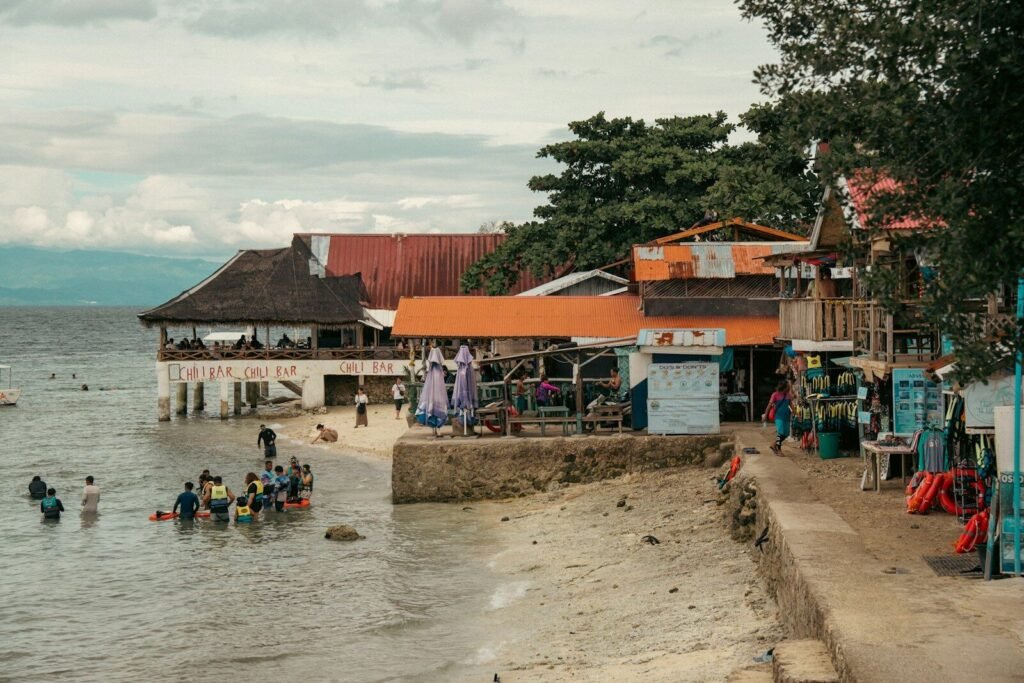
The Philippines consistently ranks as one of the most affordable countries in Southeast Asia for foreign residents, and Moalboal on the island of Cebu is a hidden gem within that country. It’s a small diving town on the western coast of Cebu, known for its sardine run and reef diving, but increasingly known among digital nomads and retirees for its extreme affordability and coastal beauty.
Rent for a basic but clean furnished apartment runs between one hundred fifty and two hundred and fifty dollars. Local Filipino food is some of the cheapest in the region. Budget around twenty to thirty dollars per week on food if you’re eating locally and cooking at home occasionally. Monthly costs here frequently land between four hundred fifty and five hundred eighty dollars all in.
The internet isn’t always perfect, but it has improved. If you need reliable connectivity for remote work, a small investment in a backup data plan solves that quickly.
Number ten. Tangalle, Sri Lanka.
Sri Lanka doesn’t get talked about enough in the relocation conversation, and Tangalle on the southern coast is a prime example of a place that’s flying under the radar. It’s a laid-back fishing town with stunning beaches, a relaxed local culture, and a cost of living that still reflects its pre-discovery status.
Monthly rent for a decent guesthouse-style room or a small local apartment starts around one hundred twenty dollars and goes up to two hundred dollars for something more comfortable. Food is incredibly affordable. A plate of rice and curry at a local spot costs less than a dollar fifty. Monthly totals for a simple but comfortable lifestyle consistently fall between four hundred and five hundred sixty dollars.
Sri Lanka has a long-stay visa option that’s increasingly attractive to retirees and remote workers. The beaches here are genuinely world class, and the crowds haven’t arrived yet.
Number nine. Batumi, Georgia.
Yes, Georgia. The country. On the Black Sea coast. Batumi is one of those places that defies expectations. It’s a modern, walkable city with actual infrastructure, fast internet, a real cafe culture, and a Black Sea coastline, and it’s remarkably affordable by any global standard.
Rent for a furnished one-bedroom apartment in Batumi starts around two hundred dollars and can go up to three hundred for something with a sea view. Food costs are low. A full sit-down meal at a local restaurant is two to four dollars. The Georgian diet is rich and varied, and local grocery markets are well stocked and cheap.
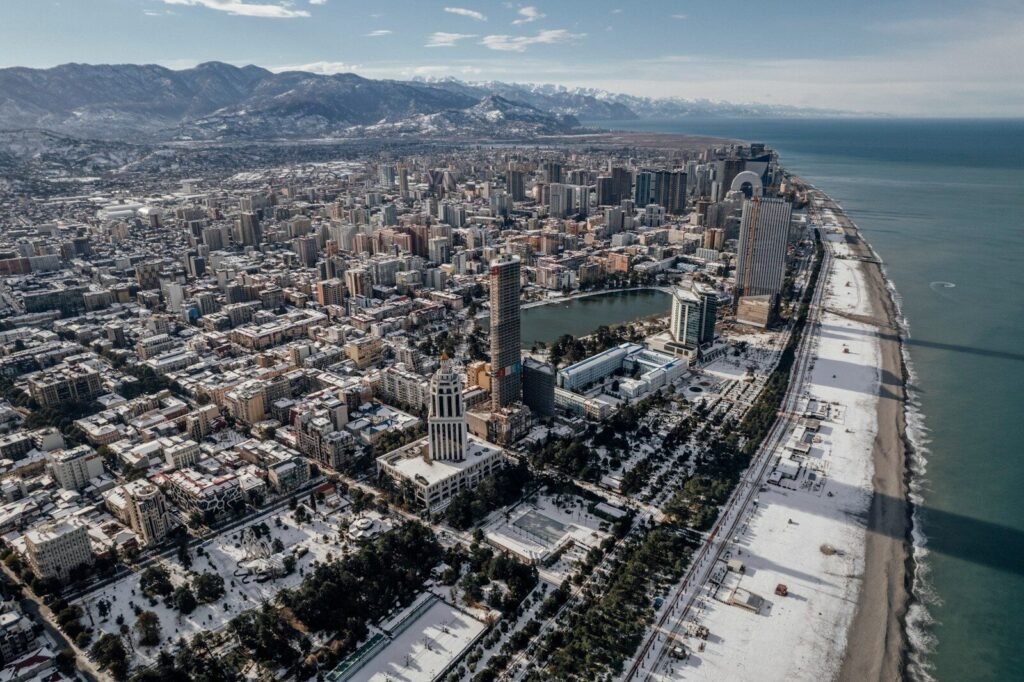
Monthly costs in Batumi for a single person living comfortably regularly land between five hundred and six hundred and fifty dollars. For those at the lower end of spending habits, it’s absolutely achievable under six hundred. Georgia also has one of the most generous long-stay policies in the world for many nationalities, allowing stays of up to a year without a visa.
Number eight. Huanchaco, Peru.
Peru is one of South America’s most overlooked affordable destinations, and Huanchaco is a small surfing village just outside the city of Trujillo on Peru’s northern Pacific coast. It has a real community feel, a slower pace than the cities, and prices that reflect genuine local economics rather than tourist inflation.
Monthly rent for a furnished room or small apartment in Huanchaco runs between one hundred fifty and two hundred fifty dollars. Fresh seafood is abundant and cheap. Local markets make weekly grocery shopping extremely budget-friendly. Monthly all-in costs here regularly land between four hundred and five hundred dollars.
The surfing culture here is real, the people are warm, and the Pacific coastline is dramatic and beautiful. For anyone who wants Latin America without the price tag of places like Medellín or Buenos Aires, Huanchaco deserves serious consideration.
Number seven. Porto de Galinhas, Brazil. Wait, actually let’s hold that one a moment. Because before we continue this list, I want to flag something that most people don’t realize when they start researching affordable coastal living.
The places that are cheapest today don’t stay that way forever.
Every single location on this list has been discovered to some degree. Kampot was even cheaper five years ago. Batumi is growing fast. Moalboal is increasingly mentioned in nomad forums. As more people find these places, the local economies respond. Rents go up. Tourist prices creep into local restaurants. The window of true affordability is not permanent.
That’s not a reason to panic. It’s a reason to move intentionally and to gather information now.
Okay. Back to the list.
Number seven. Jacó, Costa Rica.
Costa Rica is known for being one of the pricier destinations in Central America, but Jacó on the Pacific coast is still achievable on a carefully managed six hundred dollar budget. And the reason it makes this list is not just affordability. It’s stability.
Costa Rica has one of the most politically stable environments in Central America, an established expat infrastructure, excellent healthcare access, and a currency pegged closely enough to the dollar that financial planning is predictable.
Rent in Jacó for a basic but clean furnished apartment starts around two hundred and fifty dollars per month. If you cook at home regularly using local markets and produce, your food costs stay manageable. Monthly living costs for a disciplined budget sit between five hundred fifty and six hundred and fifty dollars. You can land under six hundred with intention.
The pensionado visa for retirees is one of the most respected in the world, and the lifestyle quality here, with the Pacific, the jungle, the stability, is genuinely exceptional.
Number six. Kotor, Montenegro.
Montenegro is one of Europe’s best kept secrets, and Kotor on the Adriatic coast is extraordinary. The old town is a UNESCO world heritage site. The bay is surrounded by mountains. The water is clear. And by European standards, the cost of living is genuinely low.
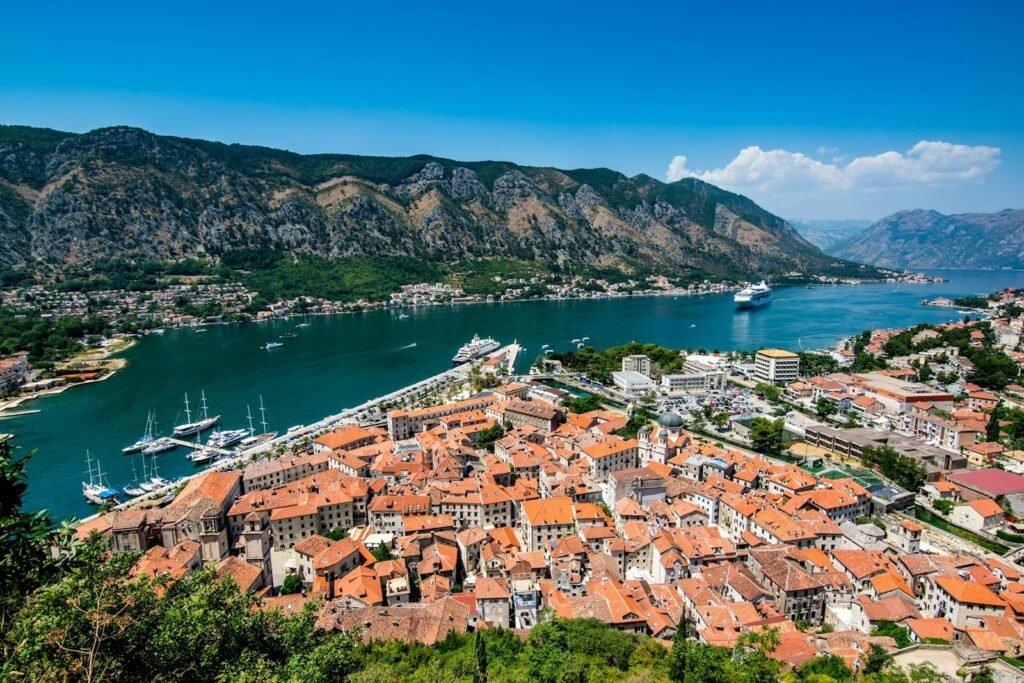
For six hundred dollars per month, you’re not going to rent a luxury apartment in Kotor’s old town. But a comfortable furnished room or studio in the surrounding area, in towns like Dobrota or Prčanj just minutes away, is absolutely in the one hundred fifty to two hundred fifty dollar monthly range. Food at local restaurants runs three to six dollars for a full meal. Monthly living costs for a single person can realistically be managed between five hundred and six hundred dollars.
Montenegro is also in the process of EU accession, which has interesting implications for anyone considering long-term residency or investment there. It has a growing digital nomad community and a quality of life that simply cannot be replicated for this price in Western Europe.
Number five. Sihanoukville adjacent areas, Cambodia, specifically Otres Beach.
We already mentioned Kampot, but Cambodia deserves a second entry because the Otres Beach area near Sihanoukville offers a dramatically different vibe. It’s quieter, beachfront, and the local economy around the Otres Beach zone has stabilized after years of development pressure into a genuinely accessible community.
Rent for a bungalow or small guesthouse room close to the beach starts at around one hundred dollars per month. If you move slightly inland, quality furnished rooms drop to eighty to one hundred fifty dollars. Monthly all-in costs with meals, transport, and modest entertainment consistently land between three hundred fifty and five hundred dollars for people living there full time.
Six hundred dollars in Otres Beach is not just comfortable. It’s genuinely prosperous by local standards. You’ll live better than most.
Number four. Shkodër, Albania.
Albania is emerging as one of the most exciting relocation destinations in Europe, and Shkodër near the Adriatic coast in the north is one of the most affordable entry points into the country. While it’s not directly on the beach, the Albanian Riviera is accessible, and Shkodër itself sits at the edge of Lake Shkodër, which offers its own stunning coastal-style living.
Monthly rent for a furnished apartment in Shkodër starts around one hundred fifty dollars. Groceries and local restaurant meals are among the cheapest in all of Europe. Monthly living costs here consistently fall between four hundred and five hundred and fifty dollars. Six hundred dollars here is comfortable and leaves a real financial cushion.
Albania is increasingly recognized in international cost of living indices as one of the most affordable European countries, and it’s gaining serious attention from remote workers and retirees who want European quality at non-European prices.
Number three. Matagalpa adjacent coastal areas, Nicaragua, specifically San Juan del Sur.
San Juan del Sur on Nicaragua’s Pacific coast is a classic surf town that has maintained its affordability even as its profile has grown. Monthly rent for a furnished room starts around one hundred fifty dollars. Street food and local restaurants are extremely cheap. A month of comfortable living here including surf lessons or activities can still land between four hundred and five hundred seventy dollars.
Nicaragua does carry political considerations that serious researchers will want to investigate thoroughly before committing. But in terms of raw affordability and natural coastal beauty, San Juan del Sur remains one of the most remarkable value propositions in the Americas.
Number two. Hua Hin, Thailand.
Thailand consistently dominates global affordability rankings for coastal living, and Hua Hin on the Gulf of Thailand is the data-backed winner for those who want infrastructure, safety, healthcare quality, and affordability combined. It’s a real town with real hospitals, real supermarkets, fast internet, and a large established expat community.
Monthly rent for a clean furnished studio in Hua Hin starts around two hundred dollars. High-quality local Thai food costs one to two dollars per meal. Monthly totals for comfortable living run between four hundred fifty and five hundred eighty dollars for most residents. Six hundred dollars gives you meaningful breathing room.
Thailand’s long-term visa options for retirees and increasingly for remote workers have improved, and the healthcare system here is legitimately excellent by international standards. This is not roughing it. This is genuinely good living.
And number one. Peniche, Portugal.
This one might surprise you. Portugal is generally considered a mid-tier European destination when it comes to cost of living, but Peniche, a fishing town on Portugal’s Atlantic coast just about an hour north of Lisbon, is still achievable on a carefully structured six hundred dollar budget, and the reason it sits at number one is not just affordability alone.
It’s the combination of Atlantic coastline, European stability, EU-level infrastructure, world class surf, an established expat community, and access to a country with one of the most foreigner-friendly tax regimes in Europe. Shared accommodation and room rentals in Peniche start around two hundred and fifty dollars. Local Portuguese food is affordable. The fish market is exceptional. With discipline and a local lifestyle approach, monthly costs between five hundred and six hundred dollars are documented and achievable.
Peniche represents the highest quality of life on this entire list within a real European context. It earns number one not because it’s the cheapest, but because it delivers the most per dollar when you factor in everything.
Now here’s something worth sitting with. Every single one of these locations has people living there right now. Not tourists. Not vacation visitors. People who made a decision, did the research, and restructured their lives around a lower cost baseline. And many of them fund that life with a simple, flexible online income that travels with them.
You don’t need a massive salary to make this work. You need a reliable income stream that covers your costs wherever you are. Right now, there’s a straightforward system for building an online income that generates between two hundred and three hundred dollars per day, starting completely from zero, even while you’re still working your current job. No complicated tech. No guesswork. Just a step-by-step process that works. The link is in the description. Check it out after this video.
As more people discover these places, and they are discovering them faster than ever, the window of maximum affordability closes a little more each year. The best time to research this was three years ago. The second best time is right now.
If you want real, practical, data-backed strategies for living better for less, subscribe to this channel. We publish research-based content consistently, and we do the analytical work so you don’t have to.
The places on this list are real. The numbers are real. The only question is whether you’re going to do something with this information.